Are You Too Old for Weight Training?
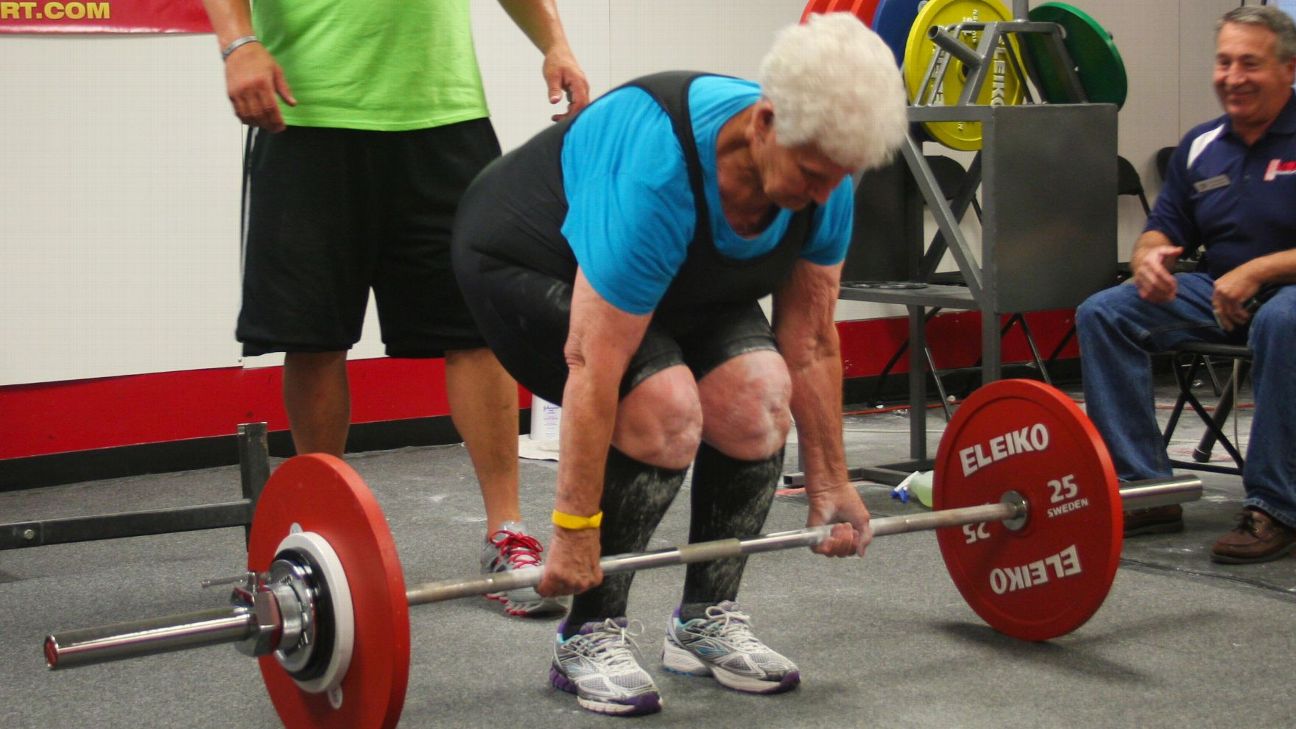
Weight training is possibly the most effective, and the fastest, way to look and feel younger as you age. Man or woman, any age, your body will respond rapidly to pumping iron. You can start at 50 or 80, it doesn’t matter. It’s never too late.
The phrase “use it or lose it” could not be more accurate in regards to the human body and aging. As we age, we naturally lose muscle mass, our joints get all creaky and either we move around a lot less, or stop moving altogether because it doesn’t feel good. The sinews and tendons grow weak, the fluids dry up, and a dangerous cycle is started. This cycle is all too common in our older population in the US.
Many physicians today believe that the causes of many of the physical changes we manifest as we age, such as osteoporosis, loss of muscle tone, and organ deterioration, cannot be tied to either inactivity or age. This means that they believe at least some of the changes attributed to aging are really caused by disuse. Male weight trainees in their 40s and up often have physiques that shame men half their age. And the same holds true for women. Weight training has formed almost as many stunning female physiques as it has for males.
Your body will continuously adapt to exercise until you die, and weight training causes a certain type of adaptation that virtually erases the usual sagging of advanced age. There is apparently something about weight training that goes beyond mere jogging or cardio allowing older adults to retain less fat and more flexibility.
The Centers for Disease Control reported in 2003 that strength training “can be very powerful in reducing the signs and symptoms of numerous diseases and chronic conditions, among them: arthritis, diabetes, osteoporosis, obesity, back pain and depression.” Those benefits apply to all ages. A study in New Zealand showed a 40% decrease in falls by women 80 years of age and older after basic strength training.
A basic guide would be to start with compound basic exercises, using light weights, three days a week. Start with doing 8 to 10 exercises with 8 to 12 repetitions. Excellent information on basic strength training can be found in any library or online, as well as how to set up a routine. A great resource on the subject is the book Getting Stronger. Weight Training for Men and Women by Bill Pearl and Gary Moore.
Another resource you should consider is a supplement called creatine. Hundreds of studies over the last 10 years have proven that creatine monohydrate increases strength and muscle size in conjunction with weight training. This compound is particularly effective in older males
A study by the University of Saskatchewan, in 2004, found that giving creatine monohydrate supplements to weight training older adults, for 12 weeks, increased muscle mass and strength more than weight training alone. Just a little tip to help you get an edge over the twentysomethings in the gym. Creatine supplements have been proven safe and effective for years now. You can buy them at your local health food store, or online if you prefer a more reasonable price.
You don’t need a gym membership or expensive equipment to get started. You can perform all the basic exercises with a good pair of adjustable dumbbells. not skimp on these though; you get what you pay for. You will want them to range from 5 pounds to 50 pounds to start off with, depending on your starting strength levels. As always, talk to your doctor before you begin any exercise program.
As to my beginning question: “Are you too old for weight training?” the answer is a qualified no! It’s up to you whether you live a healthy and active life well into your advanced years, or you can get in the car and try on one of those rolling chairs down at the local “Scooter Store”. Your choice; no excuses. The sooner you start, the sooner you get results. In no time at all you can be well on your way to improving your appearance, your physique and your outlook on life, as well as doing great things for your internal health in general. Look for my upcoming guide to essential antioxidants and how they can literally extend your lifespan.


Comments
Post a Comment